WhatsApp Now
 +(91) 8700778618

In the ever evolving world of digital marketing, Search Engine Optimisation remains one of the most important factors for building online visibility and driving organic traffic to your website.
One of the core elements in improving search performance is backlinking. These are links from other websites that point to your own.
Search algorithms continue to evolve and competition across industries grows stronger. In this environment backlinks work as signals of trust and authority.
When a reputable website links to yours, it helps search engines understand that your content is credible and relevant. This trust signal can support improved rankings in the search results.
This leads to the key question many businesses ask. Should you buy backlinks to improve your SEO performance?
In this blog we will explore what backlinks are, why they matter and the potential advantages and disadvantages of purchasing them. By the end you will have a clear understanding of whether buying backlinks is the right move for your business.
Understanding Contextual Backlinks
Contextual Backlinks, also called inbound or incoming links, are hyperlinks from one website to another.
They play a crucial role in helping search engines understand that the linked content is valuable and trustworthy. When used well, they strengthen your site’s credibility and support long term visibility.
There are various types of backlinks, including:
- Natural backlinks: Earned organically when other websites link to your content because they find it useful.
- Manual backlinks: Acquired through efforts like outreach, partnerships and guest posting.
- Self-created backlinks: Added through forums, blog comments or directories. These are usually low value and often carry higher risk.
Search engines like Google evaluate backlinks to understand a website’s authority, relevance and overall usefulness.
However, not all backlinks hold the same value.
High quality links from reputable and relevant websites are far more impactful than a large number of low quality links.
Understanding these differences is essential for building an effective and safe SEO strategy.
The Role of Backlinks in SEO
For search engines like Google, backlinks act as votes of confidence. When a reputable website links to your page, it signals that your content is useful, credible and worth recommending.
Whether you are a blogger, a business owner or a professional building an online presence, high quality backlinks play a key role in growing visibility. If you want your website to rank higher in search results, you must prioritise earning strong, relevant backlinks rather than collecting a large number of low quality ones.
A single backlink from an authoritative, topically relevant site often carries far more value than dozens of links from weak or unrelated sources. Search engines consider these signals when determining how trustworthy your site is and how well it should rank.
Backlinks contribute to:
- Improved search rankings: High quality backlinks can help your website move higher in search results by signalling trust and relevance to search engines.
- Increased referral traffic: When users click on links from other websites, they bring additional qualified traffic to your pages and increase your visibility.
- Enhanced credibility: Backlinks from reputable and relevant websites strengthen your authority and make your content appear more trustworthy to both users and search engines.
Pros of Buying Backlinks
Pros of Buying Backlinks | Cons of Buying Backlinks | How to Buy Backlinks Safely |
|---|---|---|
Can give a quick visibility push, especially for new websites | Risk of Google penalties if links look unnatural or manipulative | Buy editorial links placed naturally inside real content |
Saves time compared to long-term outreach and relationship building | Many sellers provide low-quality or spammy links | Choose websites that have real traffic and relevance, not just high DA |
Helps compete in highly competitive niches where others already have strong backlinks | Recovery from bad links or penalties can take months | Avoid bulk link packages, Fiverr gigs, and cheap offers |
Can bring referral traffic if links are placed on genuine sites | Paid links often give short-term gains, not long-term stability | Focus on contextual links, not sidebar or footer links |
Offers more control over placement and timing | ROI is not guaranteed, especially without strong content | Use branded or natural anchors, not exact-match keywords |
Can support brand mentions on industry blogs | Overuse creates an unnatural backlink pattern | Treat paid links as support, not your main SEO strategy |
Buying backlinks is a common consideration for businesses that find link building difficult and time consuming.
While Google does not encourage paid links for ranking manipulation, many brands still explore this option under controlled and compliant conditions. It is important to understand the potential advantages before deciding whether it is the right approach for your SEO strategy.
Here are some of the perceived benefits businesses look for when they consider purchasing backlinks.
1.Quick Boost in Search Visibility
- Immediate Results: Purchased backlinks from strong and relevant websites can lead to faster visibility improvements, especially for new websites that need an initial push in competitive search results.
- Competitve Edge: In highly competitive niches, brands often look for ways to match the backlink profiles of established competitors. Paid placements can help close that gap when done ethically and with quality controls.
2. Time – Saving
- Resource Efficiency: Earning backlinks organically requires consistent content creation, outreach and relationship building. This process can take weeks or even months. Purchasing placements can save time when internal resources are limited.
- Focus on Core Activities: By outsourcing link acquisition, teams free up time to work on product development, customer experience and broader marketing strategies.
3. Potential for Increased Traffic and Visibility
- Enhanced Discoverability: Strong backlinks can contribute to higher rankings, which increases visibility and the likelihood of attracting qualified traffic.
- Brand Exposure: Being mentioned on reputable websites can improve brand recognition and credibility. This can lead to more partnership opportunities or increased trust from your target audience.
4. More Predictable Outcomes
- Controlled Investment: When you choose the websites where your links will appear, you have more control over quality, relevance and expected outcomes. This level of predictability is harder to achieve with purely organic link building, which depends heavily on timing and external interest.
Cons of Buying Backlinks
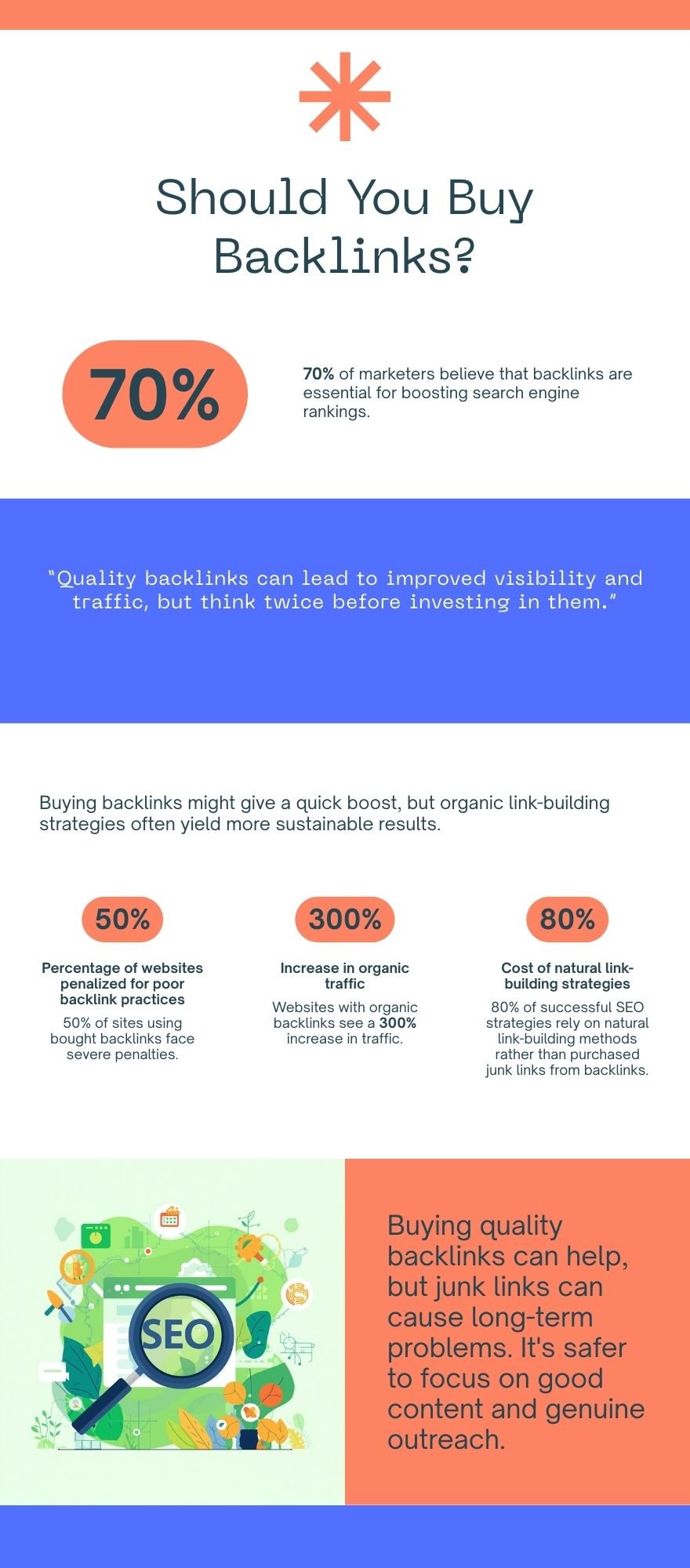
Buying backlinks may seem appealing, but it comes with serious disadvantages that can impact your website in the long term.
1. Risk of Penalties from Search Engines
- Google Penalties: Google’s updates, including Penguin and new spam policies, target unnatural or manipulative backlink patterns. If your backlink profile triggers these signals, your site can face ranking drops or, in severe cases, removal from search results.
- Long-Term Impact: Recovering from a penalty takes significant time and effort. It often involves removing or disavowing harmful links, rebuilding authority and correcting issues that caused the penalty.
2. Possibility of Low-Quality Backlinks
- Spammy Links: Many backlink sellers deliver links from irrelevant or low quality sites. Instead of helping your rankings, these links can weaken your authority and create long term SEO risks.
- Link Farms: Some providers use networks of low value sites created solely for link selling. These patterns are easy for search engines to detect and can result in penalties or trust loss.
3. Ethical Considerations and Long-Term Consequences
- Black Hat SEO Tactics: Buying backlinks is considered a black hat practice when the intent is to manipulate rankings. This goes against Google’s guidelines and can harm your credibility.
- Trust Issues: If clients, partners or competitors discover that you purchased backlinks, it can create trust issues and damage your brand reputation.
4. Financial Costs
- Expensive Investment: High quality backlinks are costly. There is no guarantee that the paid link will deliver results, especially if your strategy or website foundation is weak.
- Uncertain ROI: Buying links does not ensure sustained ranking improvements. This makes it a risky investment for businesses that need predictable outcomes.
5. Dependence on External Providers
- Lack of Control: When you purchase backlinks, you rely on third parties whose quality standards may not match your expectations. You may receive links that are irrelevant, weak or harmful.
- Scams and Fraud: The backlink selling market includes unreliable providers who take payment and disappear or deliver links that vanish within days.
Alternatives to buying backlinks
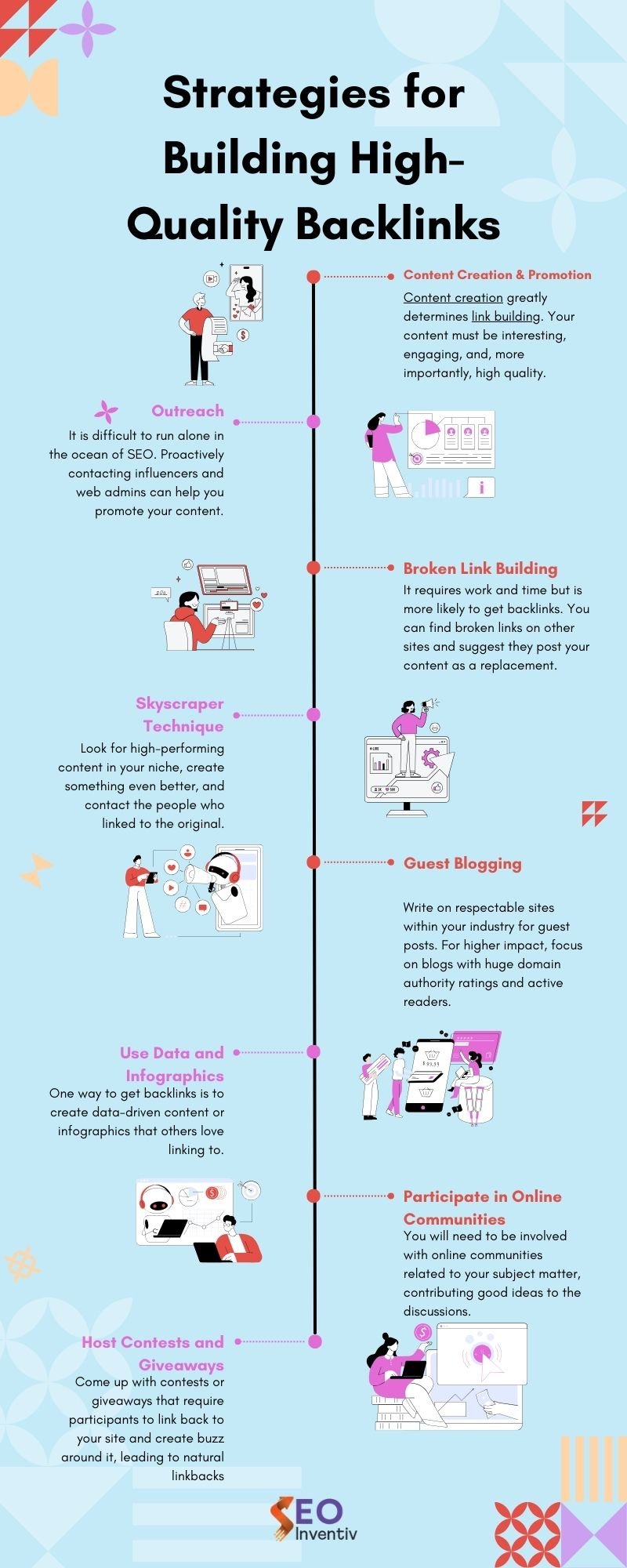
Instead of buying backlinks, consider sustainable and ethical strategies that help you build a strong backlink profile and long term authority. These approaches support organic growth and align with Google’s quality guidelines.
1. Creating High-Quality, Shareable Content
- Content Marketing: Create valuable and informative content that naturally attracts backlinks. This can include blogs, infographics, videos, whitepapers and case studies.
- Original Research: Publish unique data or insights. Research backed content is often cited by industry publications and earns high quality backlinks.
- Evergreen Content: Develop content that remains useful over time. Guides, tutorials and resource lists continue to earn links long after they are published.
2. Building Relationships with Influencers and Bloggers
- Networking: Attend industry events, webinars and conferences to connect with influencers and bloggers. Authentic relationships often lead to natural backlink opportunities.
- Social Media Engagement: Interact with creators on social platforms. Sharing their content and participating in discussions helps build rapport.
- Collaborations: Work together on co authored articles, webinars, interviews or podcasts. These collaborations often result in contextual backlinks from their websites.
3. Guest Posting and Content Contributions
- Guest Blogging: Write high quality, relevant guest posts for reputable websites in your niche. Ensure your content provides value and includes a natural contextual link where appropriate.
- Expert Roundups: Contribute insights to roundup articles where multiple experts share their perspectives. These often include backlinks to contributor websites.
4. Make use of Online Communities and Forums
- Q&A Sites: Participate in platforms like Quora and Reddit by offering helpful, detailed answers. Add links only when they are relevant and genuinely useful.
- Industry-Specific Forums: Engage in discussions on niche specific communities. Share insights and link to your content when it adds value to the conversation.
5. Utilizing Public Relations (PR) Strategies
- Press Releases: Share newsworthy updates, product launches or milestones through press releases. Features in reputable publications can earn strong backlinks.
- Media Outreach: Pitch story ideas or exclusive insights to journalists and bloggers. Building relationships with the media can result in backlinks from high authority sources.
Guidelines If you Decide to Buy Backlinks
If, after reviewing the pros and cons, you still decide to buy backlinks, it is important to follow safe and responsible practices. The goal should be to minimise risk and avoid actions that could harm your website in the long term.
How to Identify Reputable Sources to Buy High – Quality Backlinks
- Research the Provider: Take time to study the backlink seller. Look for genuine reviews, testimonials and case studies. Avoid providers with unclear processes, poor feedback or a history of using harmful tactics.
- Check Website Quality: Make sure the sites offering backlinks are relevant, trustworthy and authoritative. Use tools like Ahrefs, Moz or SEMrush to check domain metrics, traffic trends and backlink profiles.
- Avoid Too-Good-to-Be-True Offers: BHigh quality backlinks are rarely cheap. Be cautious of providers offering hundreds of links for very low prices. These often come from spammy or low value websites.
Ensuring Quality and Relevance
- Focus on Relevance: Links from websites related to your niche are more valuable and appear more natural. They also reduce the chances of raising red flags with search engines.
- Content Integration: Ensure your links appear inside useful, well written content. A contextual link within an article carries far more value than a link placed randomly or in low quality content.
- Diversify Anchor Text: Overusing one anchor text can make your link profile appear unnatural. Use a healthy mix of branded, keyword based and natural phrase anchors.
Avoiding Link Farms and Black Hat SEO Tactics
- Steer Clear of Link Farms: Link farms are networks of low quality websites created for link manipulation. Search engines detect these easily and penalise sites associated with them.
- Avoid Private Blog Networks (PBNs): PBNs can offer temporary gains but are against Google’s guidelines. Getting caught using them can lead to severe ranking losses.
- Regular Monitoring and Auditing: Continuously monitor your backlink profile using tools like Google Search Console, Ahrefs, or SEMrush. Regular audits can help identify and disavow harmful links, ensuring your backlink profile remains healthy.
Transparent and Ethical Practices
- Full Disclosure: Choose providers who are open about where links will be placed and how they acquire them. Avoid sellers who refuse to share details.
- Contract and Guarantees: Have a clear contract with the provider that outlines the terms, including the quality of the backlinks, refund policies, and guarantees. This can protect you from scams and ensure you receive the promised service.
Focusing on Long-Term Strategies
- Combine with Organic Efforts: Don’t rely solely on purchased backlinks. Combine them with organic link-building strategies for a more balanced and sustainable approach to SEO.
- Content Marketing: Invest in a robust content marketing strategy that attracts natural backlinks over time. High-quality content remains one of the most effective ways to earn backlinks.
- SEO Best Practices: Strengthen your website with good on page optimisation, technical SEO and user experience improvements. A strong foundation increases the impact of any link building activity.
In Conclusion
In the evolving world of SEO, backlinks remain an essential signal for building authority and improving your position in search results.
While buying backlinks may seem like a quick solution, the risks involved can outweigh the short term benefits. These risks include penalties, low quality links and ethical concerns that can harm your long term performance.
A more sustainable approach is to invest in high quality content, build genuine relationships and follow strong content marketing practices.
If you still choose to buy backlinks, follow strict guidelines and make sure your strategy remains safe and balanced. Prioritising organic growth will always deliver more reliable and lasting results.
Looking for Strong Backlinks?
If you are looking for relevant, high quality links for your website, a healthy mix of organic methods and a sustainable technical approach is what you need. This is where SEO Inventiv can be your partner.
Our team has over a decade of experience in SEO, content strategy and technical optimisation. We also offer content marketing, on page services and other solutions that support long term authority building.
As a bonus, you can download our free no nonsense Link Building Guide to help you get started.